Pages

Tuesday, March 15, 2016

Brevity is an art form

Low floor bus "at present". No telling what height it will be in June.
So I wrote an e.mail to Dumfries and Galloway Council in South West Scotland on Monday ...
Hello,
We are visiting Scotland in June (we live in Australia). We are travelling to Belfast for the weekend (3rd to 6th June). Our ferry tickets are booked.
I use a wheelchair. I cannot walk at all and, therefore, cannot climb stairs into a coach or bus
I see from your web site that Route 350 – operated by McLeans – runs between the Stranraer ferry terminal and Cairnryan ferry terminal. I want to ask if that service is wheelchair accessible?
Regards,
Dougie Herd
And came the reply ...
Dear Customer, 
Thank you for your enquiry.We have now passed this to the relevant department and asked them to respond. 
Kind Regards, 
DG Direct 
Followed today by ...
Dear Mr Herd
I refer to your email below.
At present this bus is low floor
Regards
Confirmation we can travel from Ayr, where my mother lives, to Belfast and back over land and sea by public transport. When I started out on this wheelchair malarkey - thirty-two years ago - I wouldn't have been able to make it into the train station unassisted ... never mind the rest.

Monday, March 14, 2016

Back to the future

Sitting in the shade of the house this morning there came a moment of epiphany. It was hot. The late summer sun - following on from what record-keepers report today is the hottest February recorded in more the seventy years - the front garden looked stressed  That's not helped, of course by the poor soil here in Canberra.

Spike stood opposite me, across the garden, beneath the shade of the trees at the roadside. It was pleasant over there, she said. And that's when epiphany struck. A lawn. Give up the almost certainly doomed attempts to cultivate vegetables in the meagre soil under a burning sun. Grow some sort of hardy grass with underground watering of some description. We can grow vegetables in large terracotta pots (as our wildly enthusiastic tomato plant is proving ... I know, I know ... a tomato is a fruit not a vegetable but you get my point). We shall redirect lost water from the roof to the pots, the apple tree that'll be going in and the grass.

Spike and Thistle-the-cat will have a shaded spot to sit or lounge or sleep in summer. We'll have grass. How retro. Who knew?

Sunday, March 13, 2016

We are sailing ...

Ship ahoy! Pic: Stena
Almost all the 'nuts and bolts' of our trip to the UK in a few months are in place now. I've just finished making our Web booking for the ferry crossings between Cairnryan and Belast where we'll see my old mate Trevor Gill perform the role of Bottom in The Royal Shakespeare Company's A Midsummer Night's Dream. How exciting is that?

We have all but one of our flights booked now, both our ferry trips (Belast and Kirkwall in the Orkney Islands) and all of the hotel accommodation in Tokyo, Prestwick, Belfast, Kirkwall, Edinburgh, Manchester, Weymouth, London and Singapore. And all the accommodation is wheelchair accessible. Hasn't the world changed in thirty years. All that's left to do is book the travel between 

  • London and Prestwick, 
  • Prestwick and Belfast, 
  • Prestwick and Aberdeen, 
  • Aberdeen and Edinburgh, 
  • Edinburgh to Manchester, 
  • Manchester to Weymouth and 
  • Weymouth to London. 
All train journeys, apart from the first leg. The online booking system at Scotrail hasn't reached the 6th June yet. I think that will tick over tomorrow. Choo, choo!

Saturday, March 12, 2016

No one (still) expects the Spanish Inquisition ... do they?


I am mildly perplexed by my response to Week 4 readings on my course, Digital Culture: Being Human in the Information Technology Age, at the ANU. I ask myself repeatedly, “why am I not more concerned? Why am I comparatively relaxed about the future?” It’s a worry (for me if no one else) because I’m not naïve. So, the erstwhile left-wing activist in me wonders why I’m seemingly complacent in the face of evidence of increasing concentration of access to and control over the world’s information in the hands of a few (just one?) giant corporation(s)? I don’t have an entirely satisfactory answer; personally or intellectually.


Siva Vaidhyanathan in the Introduction to The Googlisation of Everything and Eli Parser in the Introduction to The Filter Bubble both make compelling cases for what one could describe as citizen vigilance or oversight and greater transparency over Google and (by implication) any information platform or gatekeeper exhibiting monopoly tendencies in the digital age. Parser’s observation (in 2011) that a paradigm-shift occurred in December 2009 with the personalisation of Internet searching seems beyond dispute seven years after the fact. As both Parser and Vaidhyanathan observe / predict / caution-against the processes of Internet searching – particularly the cultural, technological and market dominance (perhaps even hegemony) of Google – have moved with startling speed from the domain of ‘cute new idea from the geeks in Silicon Valley’ to a position of ubiquity.

John Milton. Pic: Cambridge University
Omnipresent and perhaps omnipotent, the Google search may become so powerful, so influential – even essential - that if it continues unchecked, with little or no scrutiny, and outside any semblance of democratic framework, future generations may not think at all of its corporate construct, its imperatives or the technology’s mechanics. Google – like the sun to Neolithic humans – will simply ‘Be’. The power of information technology itself, the deep as well as superficial benefits we derive and enjoy from search engines such as Google (my personal spectrum of Internet searching in the last few days includes finding the complete text of John Milton’s Areopagitica for ENGL3005 at the ANU to John Oliver’s critique of Donald Trump[1] and much in between) may increasingly be taken for granted, seen almost as a natural part of the human condition rather than a purposeful project at risk of accelerating beyond public accountability.

The history of convergence that permits (possibly encourages) information industry monopolies, recounted in Wednesday’s lecture on the Course, coupled to the increasingly sophisticated (and secret) algorithms at the heart of rapidly developing technological capabilities of both hardware and software do justify the questions and concerns raised by Parser and Vaidhyanathan. One cannot help wondering, however, if their articles / books from 2011 were – even at the point of publication – already too late; urging us to close the stable door long after (in Information Technology terms) the Google horse had bolted.

As Vaidhyanathan points out, by 2011 the dynamics of the relationship between us and ‘the machine’ had already been irrevocably changed. We are no longer Google’s customers (allowing the possibility that we might have been, once upon a time) “we are its product.” We may see ourselves as purposeful seekers of information, freely and consciously selecting Google as our search engine of choice. The reality may indeed be opposite. We are data packets being delivered to any corporate entity willing to pay.

A partial explanation for my relative comfort about our current circumstances (but not a justification arguing against the need to protect the future through citizen vigilance within a democratic framework) may be found in the past; with John Milton’s Areopagitica oddly enough. It is a famous historical text sometimes misrepresented as a defence of unfettered free speech when in fact its reach is much more modest. It is a powerfully argued case against pre-publication (but not post-publication) censorship and an appeal to legislators not to sanction a single all-powerful, state-sanctioned publishing house and system of official licensing of published works – all that’s fit to print so to speak.

The Name of the Rose - Umberto Eco
The optimist in me sees parallels between Milton’s period (and his recent past age) and ours. By which I mean, humans protected and extended their access to and use of information, including written works. (To be clear: I don’t advocate a return to Medieval practices that would hang, draw and quarter people who illegally download Game of Thrones.)

The Protestant Reformation emerged as opposition to the Pope’s omnipotence routinely enforced by his agents using brutality and violence. Radicals were burned at stakes for diversifying and democratising access to information (e.g. printing the Bible in languages other than Latin). An oligarch – it could just as easily have been a Chinese Emperor or Russian Czar – sought to exercise total control over their world’s information – the content (words in Latin), platform (the book), delivery (the priesthood), access (attend church and hear the words being read out by a priest). The algorithms of the day, governing who got access to which packets of data, were set secretly by Cardinals in locked rooms.

Francisco De Goya - Inquisition
We got beyond the copyright protection practices of the Spanish Inquisition. The optimist in me believes / hopes an engaged citizenry, producing content (even if it’s no more than cat videos at times) as well as consuming content, will find was to survive, circumvent, use but not succumb to Vaidhyanathan’s ‘Googlisation’.


[1] https://www.youtube.com/watch?v=TGc2nN9OguQ from ‘Last Week Tonight’ Show on HBO

Tuesday, March 08, 2016

The man who gave the world self-assembly furniture

Gillis Lundgren first sketched the Billy bookcase on the back of a napkin.
Gillis Lundgren. Pic: Bilder i Syd
A man I had never heard of before today has died. Vale Mr. Gillis Lundgren, fortuitous inventor in 1956 of flat-packed furniture and designer of the self-assembly Billy bookcase. 

We currently have eleven of them; ten up and bearing books, one still in its cardboard container waiting for Spike to finish the job. Gillis Lundgren, an unsung hero of modernity. A man who influenced the lives of tens of millions of us. Me included.

Monday, March 07, 2016

Mr. Angry from Gilmore comments ...

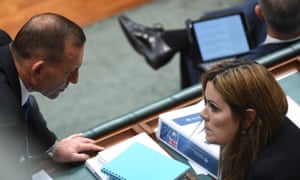
Tony Abbott and Peta Credlin
Failed politician and former Chief of Staff. Pic: Mick Tsikas/AAP
Down here in Australia there has been a flurry of journalistic activity arising from the anticipation of the publication today and extracts from a book about the downfall of Tony Abbott, former Prime Minister of Australia.  Much of the current excitement revolves around the fall out last September from perceptions (which means tittle-tattle and gossip) within the parliamentary Coalition group that Mr. Abbott might have been having an affair with his Chief of Staff, the reputedly fearsome Peta Credlin.

I neither know nor care about the depth or otherwise or the precise nature of the pair's personal relationship. It's simply none of my business.

Tony Abbott has, justifiably in my view, refused to comment on or respond to questions about whether or not he and Ms. Credlin have indeed been inside each others underpants. But if I understand correctly what Nicki Savva, the journalist and author at the centre of row, has asserted or reported in her book it's this. She doesn't allege or comment on claims our former PM and his Chief of Staff were at it. She does, however, quote from named sources in the former PM's own political party (who have subsequently gone public) who confirm that Coalition gossip about unfounded, firmly-denied and unprovable claims of an affair were what finally tipped Abbott Government supporters over the edge to unseat their leader.

But the whole 'did they / didn't they?' business of salacious tittle-tattle misses the point. And even the defensive Mr. Abbott sought to turn the gossip to self-serving advantage. In having a go at the (presumably) false and almost entirely irrelevant question of sex (unless you're Mr. and Mrs. Abbott or Mrs. and Mr. Credlin) Tony Abbott sought to reclaim his tarnished reputation by defending his own and his Government's political records and so-called achievements.

It was at this point of reading an article in today's Guardian that Mr. Angry from Gilmore added to the frenzy by submitting a comment below the line of my favourite journal.
Abbott said in a statement on Monday the best response to the book was “the objective record of the Abbott government”, 
It's none of my business and I truly could not care less about Tony Abbott's sex life. 
NOT - INTERESTED - IN - ANY - WAY - SHAPE - SIZE - OR - FORM. 
But it is disturbing how demonstrably delusional Mr. Abbott seems to be. The 'objective record' of the Government he led - and of which the current PM was a member - was so astonishingly bad, so inept that not even his Tory mates could do anything but dump Mr. Abbott - unambiguously the worst, most incompetent, failed Government leader in Australia's history.
My saving grace is that 16 fellow readers recommended my comment. One reader, however, contradicted my assessment, suggesting that 'stopping the boats' was part of the good 'objective record'. A Guardian reader? Please.