Pages

Showing posts with label Sydney University. Show all posts

Tuesday, July 31, 2012

Imagining America


My university study proper resumed today with the first classes of my literature unit (Imagining America, led by Dr David Kelly with whom I’ve studied previously – his Literature and Cinema course on book to film adaptations).  Typically (for me) I mossed the first class, a one hour lecture, thanks to a meeting running over at work.  I suppose I can’t complain too much.  NDS is allowing me the flexibility I need to study at all.  But I’ll try hard in the future not to miss classes.  I did make it to the first of our weekly two-hour seminars; this week an introduction to the course as a whole.  I volunteered to take the first week’s seminar topic (next Tuesday) on Walt Whitman with a particular focus on The Song of Myself.  I was the only person to put my hand up for Whitman, which I was rather pleased about.  I’m not keen on undergraduate group work.  To be honest, it’s because every time it’s foisted upon me my mark drops a notch or two. 

This afternoon we discussed the idea of America, considered within the context of American Exceptionalism and ‘the American experiment’ in nationhood and nation-building.  There were divergent views on the extent to which the exceptionalism notion still features in contemporary political philosophy (as distinct from current political discourse).  I tended towards that remains live within both philosophy and discourse (thinking of Bush and the Neo-Cons not so long ago or the Tea Party today).  A couple of my fellow students argued a similar perspective (with a sounder base in fact than I offered).  Dr Kelly saw it as less real in the current political philosophies at play in modern America although still a strong driver in the public discourse of candidates competing for office.  He argued (I think) that we’re in a different phase, beyond the triumphant and imperialist march of the great 20th Century powerhouse, although the USA remains a great power but the hegemony of the white, Anglo-Saxon Protestant elite that emerged from the ‘founding fathers’ is waning (Dr Kelly suggests) as the nation fragments, diversifies and re-considers internally its foundation myths while, economically and culturally, the idea of American hegemony in a globalised economy as reached its limits. 

Rip Van Winkle by John Howe
We started our literary examination of an imagined America with Washington Irving’s Rip Van Winkle.  I read the story as a child.  The only part that stuck with me was the part about the man who falls asleep for 20 years.  I remember it as a modern fairy tale – Dr Kelly used the term ‘tall tale’ which has more meaning in the American context; that’s the tradition Faulkner was invoking with As I Lay Dying. Although I read the story before the class and was able to offer some analysis and interpretation of it – particularly around the portrayal of women, the soft spot it exhibits for the laconic, ne’er do well male hero, the reassurance of continuity and progress around or across the bifurcating disruption of the long sleep, among others - I was struck by the differences between Dr K’s much closer, more analytical reading of the text than I could manage.  I realise, of course, that he’s a full time academic at a major institution and that American literature is one of his areas of interest.  Nevertheless, I should have been able to see more than I did.  My reading must become more analytical.  I need to become more rigorous in asking myself what’s going on and seeing the answers present in the text.  So I didn’t adequately describe the contrast in women’s roles before and after the big sleep (Dame Van Winkle may be a shrew but she has agency; Rip Van Winkle’s daughter is domesticated and nurtures the next male generation).  I didn’t see the satire on the monarchy or on the transfer of power from King George to George Washington (asking the question, to what extent has circumstances truly changed / improved for ordinary people?).

The point is this: I must sharpen my powers of observation.  I need to see better what it is that’s going on inside a text, not simply what’s happening with or to the story or its characters.  I’m looking forward to the rest of the semester.  I may even learn something.

Monday, July 09, 2012

The Murders of the Rue Morgue

Charles Gemora plays the ape in the 1932 film
What a weird little tale, so entirely dependent upon the exotic, orientalism of an Orang Utan from Borneo; an animal that could not have been well-known in 1841 from a place that most readers would have known almost nothing about (if they knew anything at all).  I was about half way through reading the tale when I remembered that I read it once before, years and years ago, probably when I was a teenager.

It seems so quaintly old-fashioned despite its graphic, Gothic imagery of violence.  When it was published though, it must have been read as shockingly modern.  Did Poe invent the private detective with his character Dupin?  He pre-dates Sherlock Holmes by nearly fifty years and must surely have been part of Conan Doyle's thinking as he constructed the acutely perceptive, supremely analytical Holmes.

Sunday, July 08, 2012

Reading Walt Whitman

I have said that the soul is not more than the body,
And I have said that the body is not more than the soul,
And nothing, not God, is greater to one than one's self is,
And whoever walks a furlong without sympathy walks to his own funeral drest in his shroud,
And I or you pocketless of a dime may purchase the pick of the earth,
And to glance with an eye or show a bean in its pod confounds the learning of all times,
And there is no trade or employment but the young man following it may become a hero,
And there is no object so soft but it makes a hub for the wheel'd universe,
And I say to any man or woman, Let your soul stand cool and composed before a million universes.

(Song of Myself, the opening lines of Section 48)

Monday, July 02, 2012

Another cheery tale from Poe

Opium this time, rather than alcohol.  A dying woman confined in a turret rather than entombed in a wall.  A guilt-stricken narrator.  And a Gothic sensibility that pre-dates the Hammer Horror films of the 1960s by more than 120 years.  How Gothic can an author be and yet get away with it?  Try this from Ligeia:

Ligeia at ebooks@adelaide
The room lay in a high turret of the castellated abbey, was pentagonal in shape, and of capacious size. Occupying the whole southern face of the pentagon was the sole window — an immense sheet of unbroken glass from Venice — a single pane, and tinted of a leaden hue, so that the rays of either the sun or moon, passing through it, fell with a ghastly lustre on the objects within. Over the upper portion of this huge window, extended the trellice-work of an aged vine, which clambered up the massy walls of the turret. The ceiling, of gloomy-looking oak, was excessively lofty, vaulted, and elaborately fretted with the wildest and most grotesque specimens of a semi-Gothic, semi-Druidical device. From out the most central recess of this melancholy vaulting, depended, by a single chain of gold with long links, a huge censer of the same metal, Saracenic in pattern, and with many perforations so contrived that there writhed in and out of them, as if endued with a serpent vitality, a continual succession of parti-colored fires.

The odd thing (it seems odd to me) about these Gothic tales (and the doom-laden poetry) is that they were mostly written before Virginia's death, not after.  In 1838 when Ligeia was written or 1845 (The Black Cat and The Raven) the horror of a young wife's death had not been visited upon Poe.  If the chronology had been reversed, the wife's death (aged 25) then the Gothic writing, one might see a possible point of origin.  But that's not how Poe's story went, so where did the tales spring from, I wonder?

Saturday, June 30, 2012

Reading more Poe

"I shall ever bear about me a memory of the many solemn hours I thus spent alone with the master of the House of Usher. Yet I should fail in any attempt to convey an idea of the exact character of the studies, or of the occupations, in which he involved me, or led me the way. An excited and highly distempered ideality threw a sulphureous lustre over all. His long improvised dirges will ring forever in my ears. Among other things, I hold painfully in mind a certain singular perversion and amplification of the wild air of the last waltz of Von Weber. From the paintings over which his elaborate fancy brooded, and which grew, touch by touch, into vaguenesses at which I shuddered the more thrillingly, because I shuddered knowing not why ; - from these paintings (vivid as their images now are before me) I would in vain endeavor to educe more than a small portion which should lie within the compass of merely written words. By the utter simplicity, by the nakedness of his designs, he arrested and overawed attention. If ever mortal painted an idea, that mortal was Roderick Usher. For me at least - in the circumstances then surrounding me - there arose out of the pure abstractions which the hypochondriac contrived to throw upon his canvass, an intensity of intolerable awe, no shadow of which felt I ever yet in the contemplation of the certainly glowing yet too concrete reveries of Fuseli."

From Edgar Allan Poe's The Fall of the House of Usher

Henry Fuseli, The Nightmare, 1791
Henry Fuseli, Thor Bettering the Mitgard Sepent 1790

Tuesday, June 26, 2012

Classic Poe

I read another Poe short story this evening, The Black Cat; a grizzly tale of horror, fate and the demon consequences of drink.  Three short stories read in a week and the catastrophic follies of alcohol are explored in two of them.  I'm guessing Poe was a remorseful, guilt-ridden drunk.    Although there are a couple (at least) of implausible narrative leaps in the story it still has some power, particularly of imagery.  The narrator's brutal attack on poor, ageing Pluto with his eyeless socket.  The cat's image seared on the bedroom wall's plaster.  The ghoulish, blood-soaked image of the penultimate sentence.  Written by Poe 170 years ago but still clear, still disturbing.  And for all that there's clumsiness in places there's a brilliantly positioned point of revelation when we learn, more than half way through the story, about location.  It immediately enriches the story, propelling it towards the doom-laden conclusion.  Great stuff.  Classic Victorian horror.  He may have invented the genre all by himself.

Sunday, June 24, 2012

Midnight's Children

Not having been to bed overnight, I'm very tired.  But I managed a couple of (short) chapters from Book 2 of Salman Rushdie's Midnight's Children.  It truly is a masterpiece of 20th Century literature; written beautifully, in places lyrical but still demonstrably modern; hugely imaginative, bursting with references to the modern age (not simply post-colonial Indian history) and overflowing with ideas.  All that and it's funny too. Everyone should read it. 

In the early evening I read some of Poe's verse (and criticism thereof).  There was The Raven (of course) and a couple of his earlier works, To The River (1829) and The Sleeper (1830).  I can't quite decide if I think The Raven is a bold, great poetic work or really not very good at all.  Yeats inclined to the latter view I believe and he's a hard man to ignore.

The Raven

Once upon a midnight dreary, while I pondered weak and weary,
Over many a quaint and curious volume of forgotten lore,
While I nodded, nearly napping, suddenly there came a tapping,
As of some one gently rapping, rapping at my chamber door.
`'Tis some visitor,' I muttered, `tapping at my chamber door -
Only this, and nothing more.'

Ah, distinctly I remember it was in the bleak December,
And each separate dying ember wrought its ghost upon the floor.
Eagerly I wished the morrow; - vainly I had sought to borrow
From my books surcease of sorrow - sorrow for the lost Lenore -
For the rare and radiant maiden whom the angels named Lenore -
Nameless here for evermore.

And the silken sad uncertain rustling of each purple curtain
Thrilled me - filled me with fantastic terrors never felt before;
So that now, to still the beating of my heart, I stood repeating
`'Tis some visitor entreating entrance at my chamber door -
Some late visitor entreating entrance at my chamber door; -
This it is, and nothing more,'

Presently my soul grew stronger; hesitating then no longer,
`Sir,' said I, `or Madam, truly your forgiveness I implore;
But the fact is I was napping, and so gently you came rapping,
And so faintly you came tapping, tapping at my chamber door,
That I scarce was sure I heard you' - here I opened wide the door; -
Darkness there, and nothing more.

Deep into that darkness peering, long I stood there wondering, fearing,
Doubting, dreaming dreams no mortal ever dared to dream before;
But the silence was unbroken, and the darkness gave no token,
And the only word there spoken was the whispered word, `Lenore!'
This I whispered, and an echo murmured back the word, `Lenore!'
Merely this and nothing more.

Back into the chamber turning, all my soul within me burning,
Soon again I heard a tapping somewhat louder than before.
`Surely,' said I, `surely that is something at my window lattice;
Let me see then, what thereat is, and this mystery explore -
Let my heart be still a moment and this mystery explore; -
'Tis the wind and nothing more!'

Open here I flung the shutter, when, with many a flirt and flutter,
In there stepped a stately raven of the saintly days of yore.
Not the least obeisance made he; not a minute stopped or stayed he;
But, with mien of lord or lady, perched above my chamber door -
Perched upon a bust of Pallas just above my chamber door -
Perched, and sat, and nothing more.

Then this ebony bird beguiling my sad fancy into smiling,
By the grave and stern decorum of the countenance it wore,
`Though thy crest be shorn and shaven, thou,' I said, `art sure no craven.
Ghastly grim and ancient raven wandering from the nightly shore -
Tell me what thy lordly name is on the Night's Plutonian shore!'
Quoth the raven, `Nevermore.'

Much I marvelled this ungainly fowl to hear discourse so plainly,
Though its answer little meaning - little relevancy bore;
For we cannot help agreeing that no living human being
Ever yet was blessed with seeing bird above his chamber door -
Bird or beast above the sculptured bust above his chamber door,
With such name as `Nevermore.'

But the raven, sitting lonely on the placid bust, spoke only,
That one word, as if his soul in that one word he did outpour.
Nothing further then he uttered - not a feather then he fluttered -
Till I scarcely more than muttered `Other friends have flown before -
On the morrow he will leave me, as my hopes have flown before.'
Then the bird said, `Nevermore.'

Startled at the stillness broken by reply so aptly spoken,
`Doubtless,' said I, `what it utters is its only stock and store,
Caught from some unhappy master whom unmerciful disaster
Followed fast and followed faster till his songs one burden bore -
Till the dirges of his hope that melancholy burden bore
Of "Never-nevermore."'

But the raven still beguiling all my sad soul into smiling,
Straight I wheeled a cushioned seat in front of bird and bust and door;
Then, upon the velvet sinking, I betook myself to linking
Fancy unto fancy, thinking what this ominous bird of yore -
What this grim, ungainly, ghastly, gaunt, and ominous bird of yore
Meant in croaking `Nevermore.'

This I sat engaged in guessing, but no syllable expressing
To the fowl whose fiery eyes now burned into my bosom's core;
This and more I sat divining, with my head at ease reclining
On the cushion's velvet lining that the lamp-light gloated o'er,
But whose velvet violet lining with the lamp-light gloating o'er,
She shall press, ah, nevermore!

Then, methought, the air grew denser, perfumed from an unseen censer
Swung by Seraphim whose foot-falls tinkled on the tufted floor.
`Wretch,' I cried, `thy God hath lent thee - by these angels he has sent thee
Respite - respite and nepenthe from thy memories of Lenore!
Quaff, oh quaff this kind nepenthe, and forget this lost Lenore!'
Quoth the raven, `Nevermore.'

`Prophet!' said I, `thing of evil! - prophet still, if bird or devil! -
Whether tempter sent, or whether tempest tossed thee here ashore,
Desolate yet all undaunted, on this desert land enchanted -
On this home by horror haunted - tell me truly, I implore -
Is there - is there balm in Gilead? - tell me - tell me, I implore!'
Quoth the raven, `Nevermore.'

`Prophet!' said I, `thing of evil! - prophet still, if bird or devil!
By that Heaven that bends above us - by that God we both adore -
Tell this soul with sorrow laden if, within the distant Aidenn,
It shall clasp a sainted maiden whom the angels named Lenore -
Clasp a rare and radiant maiden, whom the angels named Lenore?'
Quoth the raven, `Nevermore.'

`Be that word our sign of parting, bird or fiend!' I shrieked upstarting -
`Get thee back into the tempest and the Night's Plutonian shore!
Leave no black plume as a token of that lie thy soul hath spoken!
Leave my loneliness unbroken! - quit the bust above my door!
Take thy beak from out my heart, and take thy form from off my door!'
Quoth the raven, `Nevermore.'

And the raven, never flitting, still is sitting, still is sitting
On the pallid bust of Pallas just above my chamber door;
And his eyes have all the seeming of a demon's that is dreaming,
And the lamp-light o'er him streaming throws his shadow on the floor;
And my soul from out that shadow that lies floating on the floor
Shall be lifted - nevermore!

Saturday, June 23, 2012

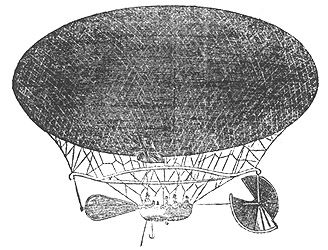
The Balloon Hoax

Woodcut of The Victoria Steering Balloon
Poe's diagram of the model of the Victoria
What an odd little tale, printed in The New York Sun in 1844.  According to the Poe stories web site the short piece of speculative fiction appeared as if it was a news story rather than a tall tale.   I don't suppose that Poe or his readers could have known that the temperature at 25,000 feet is in the region of -50 degrees Celcius.  There's something of Jules Vernes in the gentleman characters but Around The World in Eighty Days wouldn't be published for almost 30 years (in 1873).  And the response of readers, turning up at the newspaper office brings to mind the reports of hysterical responses to Orson Welles's 1938 broadcast of The War of the Worlds.

Friday, June 22, 2012

Imagining America

One of my two units of study next semester is called Imagining America.  I'm looking forward to it for a variety of reasons, not least of which is the fact that Dr David Kelly will run the course.  I enjoyed his Literature and Cinema unit (although we could not agree on the merits of Hitchcock's Rope).

The reading list for Imagining America includes Poe, Whitman, Dickinson, Twain, Chopin, Fitzgerald, Faulkner, Ginsberg, Dylan, Eastwood and Scorsese.  I confess to being less than wildly enthusiastic about Whitman but I'll try.  The rest I've read / seen and know to varying degrees.  I know Poe least well I think (maybe Mark Twain and Chopin) but I'm looking forward to reading as much as possible of all the writers (even WW).

I want to get ahead of the unit.  I can be lazy and often struggle to keep up with the schedule of reading, only because I tend to leave works to the last minute.  So I've spoken sternly to my inner self, telling me to read, read and re-read as much as I can.  (There's a bit of me wonders how well I might do as a student, how much I might improve my marks, you know, if I had a more adult approach to the reading lists.  I kid myself on that I like to fly by the seat of my pants; brain the size of a planet, winging it at the last minute ... isn't that proven with those ninety-something scores?  Well no Douglas and besides, you said you were returning to university to learn, to understand better ... maybe even to write better ... so scores alone signify nothing.  They certainly don't indicate learning, merely an ability to write a decent essay, which is far from the same thing).

My attempt to get ahead of the reading (and stay ahead) began today with Edgar Allan Poe's quirky short story from 1844, The Angel of the Odd.  Here's part of it:

 ... in an incredibly brief period the entire building was wrapped in flames. All egress from my chamber, except through a window, was cut off. The crowd, however, quickly procured and raised a long ladder. By means of this I was descending rapidly, and in apparent safety, when a huge hog, about whose rotund stomach, and indeed about whose whole air and physiognomy, there was something which reminded me of the Angel of the Odd, -- when this hog, I say, which hitherto had been quietly slumbering in the mud, took it suddenly into his head that his left shoulder needed scratching, and could find no more convenient rubbing-post than that afforded by the foot of the ladder.

 Whimsical is a word that comes to mind.  But I did smile.

Monday, June 18, 2012

And today's number is ...

92 (minus two for being a day late).  Picked up my essay on Faulkner's As I Lay Dying.  Phew.  I couldn't hand it in on the due date because I had no idea what to write.  So I took another day and found something.  I don't quite recall how I stumbled on this but I did and my tutor liked it:

No words can prepare the self for oblivion; an observation Addie makes with reference to Anse by means of Faulkner’s almost poetic allusion to entropy within the Second Law of Thermodynamics: 
I would think about his name until after a while I could see the word as a shape, a vessel, and I would watch him liquify and flow into it like cold molasses flowing out of the darkness into the vessel, until the jar stood full and motionless: a significant shape profoundly without life like an empty door frame; and then I would find that I had forgotten the name of the jar. (p.99)  

 Sometimes you get lucky. 

Saturday, May 19, 2012

As I Lay Dying

I finished my essay on Addie's monologue from Faulkner's As I Lay Dying.  It was only a short assignment (my piece comes in at 922 words, including the direct quotes ... so there's maybe 800 of my own words).  Nevertheless I couldn't find my way in for days and if I can't see the way in I have no chance of getting out again.  So it's a day late, which means two points lost before anyone starts to count.  I had no choice though.  Yesterday I had nothing but fragments.

Here's how I finished:

"My mother is a fish"


Addie’s passage is, therefore, pivotal to many ways of reading Faulkner’s novel: as an, at times, horrific re-working of Homer’s epic tale of the return home, suffused with absurd and darkly improbable humour; as an exploration of the tensions within and contradictions between public and private constructions of identity illustrated through variations of voice, tone, register and syntax among characters inhabiting the same, precisely delineated fictional world; as a cautionary fable concerned with the destructive and alienating effects of Modernity; as a recognition of ways in which the unmodern – in particular, death – persists (if not triumphs) in life; and as a writing experiment to demonstrate the author’s Modernist concern with the limits of language as a vehicle to express or explain meaning and truth.  

We'll see.


Illustration by Nate Olsen at NATEOMEDIA 

Friday, May 18, 2012

And today's number is ...

92.

Received my essay on Ellroy (L.A. Confidential) for my postmodernism course.  Happy camper.

Tuesday, May 15, 2012

In search of 750 words

William Faulkner and his typewriter in Hollywood
Working on my Faulkner essay, due on Friday.  Still not sure what I may write about Addie's monologue but I'll get there, with luck, by the submission deadline.

It's been observed in many places that William Faulkner wrote As I Lay Dying in six weeks without altering a word.  That may or may not be true but it's essentially beyond the point.  It's a brilliant work of what my tutor calls American Regional Modernism; a frontier tall tale of humour and horror; the point of meeting between myths of agrarian folk culture and cosmopolitan modernism; Homer meets Mark Twain meets Virginia Woolf.  It's hard not to be impressed; difficult not to feel daunted by such authorial power.

Sunday, May 06, 2012

Jacob's Room


I finished Virgina Woolf's first experimental work today (it was VW's opinion that her first two novels are conventional).  She tried to build a fictional world with none of the structure of the novel up to that point.  So there's no beginning, middle or end (the penultimate sentence is an unanswered question).  Time is pervasive but never chronological.  Architecture informs character, mood, perception but we seldom linger anywhere, in any building, for long (the Reading Room of the British Museum maybe; the Parthenon and St Paul's Cathedral perhaps but always in an elliptical manner, coming back and forth, moving in and out).  It's a short, affecting read.  I made what may have been a mistake by playing Beethoven's Moonlight Sonata from the point in Chapter Three that Woolf writes "... the Moonlight Sonata answered by a waltz." (page 54 in my edition, Oxford World Classics).  What a powerful (depressingly so) sense of a doomed, lost generation of young men it evoked.  It's as effective ... not quite maybe ... as the middle section of To the Lighthouse which may be unsurpasable IMHO.

Jacob's Room is an impressive read; eye-opening about what can be done with fiction; moving.  It's not perfect though (what is?).  The butterfly metaphor was overdone (particularly in the chapters before we get to London) and that social strata upon which VW turns her perceptive gaze was irritatingly narrow but given who she was and how the First World War affected her own connections I suppose one can forgive her.  It's certainly a novel to read but not on any day you're a bit depressed by life's ability to subdue one's enthusiasm.

Friday, April 27, 2012

Some numbers drive me nuts

Take 84 as an example.  I picked up my short essay on Defoe's Roxana from a tray outside my tutor's office this afternoon.  84%.  I ask you, what's that all about?

My mark is one point below a High Distinction grade.  One point.  I'd much rather receive a lower mark - the high-seventies or low-eighties maybe - because the mark would be clear.  Dougie, it would say to me, middling sort of effort.  Must try significantly better.  84 though?  That one point is within a margin of error that has nothing to do with careful assessment.  It's a message - not quite good enough for a High Distinction but very close, almost there, treat this as sign of encouragement, missed it be a whisper.

Aaaaaaaarrrrrrrrggggggghhhhhhhhhhhhh!

Good.  Got that of my chest.

Tuesday, April 17, 2012

Voice

Spike had an interesting seminar at the Art College today, considering 'voice' in writing.  Her tutor had referred the class to a questioning article / sceptical review from The New Yorker (2004) written by Louis Menand.  Spike and her class mates were asked to "bring to class an example (no more than two paragraphs) of some writing (any genre) where you think the writer's voice is strong."  Spike selected the first page of Anansi Boys by Neil Gaiman.  Good choice.  If it had been me going to class, I'd have taken Prufrock.  No more constructed voice in literature. 

LET us go then, you and I,
When the evening is spread out against the sky
Like a patient etherized upon a table;
Let us go, through certain half-deserted streets,
The muttering retreats       
Of restless nights in one-night cheap hotels
And sawdust restaurants with oyster-shells:

Monday, April 16, 2012

You mean ... out loud?

William Makepeace Thackery
Any person passing-by the silent room in which a score of bright but bored students of English literature sat today between four and five o'clock in the John Woolley Building of the University of Sydney might have wondered if the ghastly horror of an enormous, noisy fart had just ripped through the air inside, rendering all members of the class speechless, mortified lest their colleagues or the tutor might put the blame on them.  But no, the silence was not born of guilt or knowledge of the guilty farter in the midst of such unspeakable agony.  All that had occurred is that the pleasant, if inexperienced, tutor, sitting at the teacher's spot in front of the whiteboard, the sole occupant of the fourth wall of our makeshift group shelter, had asked that someone in the group read a short passage from Vanity Fair before we started to discuss what it might tell us of the author's interests, style, themes, purposes ... who knows what?  Eyes dropped to stare at the floor.  A few reluctant students shuffled in their seats, feigning purposeful activity such as turning the page of a notebook, losing one's place in the text, breaking the tip of a pencil.  Silence ruled while the great fart of engagement toured the desks in the forlorn hope that one of the assembled number might confess to an interest, a willingness, a liking even, for the act of reading from one of the greatest satirical novels ever penned in what was, when all's said and done, a university level course in English literature focusing on, of all unlikely things, the novel in English.

Interloper that I was, taking the class because I'll be in Perth on Friday when my usual tutorial is scheduled, I felt that one of the regulars might want to fill the gap.  But no, it appeared not.  Unfortunately I was unable to assist.  Pretending to myself that I'm a modern reader I'd equipped myself with a Kindle version of the text on my ASUS Transformer.  As the gods of anti-modernity would have it though my Tablet had died earlier in the day.  That's an overstatement because Spike resuscitated the computer when I got home. So, unable to bear the painful silence I apologised for being without text, recounted briefly the sad tale of my defunct tablet and was on the point of asking the bored young women next to me if I could borrow her pristine, possibly unread, copy.  Another young woman then interjected.  She would read.  I'm not quite sure if her threshold for pain at the awkwardness of our collective reluctance was close to mine or, perhaps, she felt sorry for the nice old man at the other side of the room who had suffered a not uncommon IT problem.  Either way, she read.  Between us ... her, the tutor and me ... we got a conversation going but it was hard.

I admit to puzzlement.  We're students of English, aren't we?  Who among us ... language barriers aside ... would not want to read out loud in the presence of such bright thinkers?  I'm NOT taking the piss.  It seems I'm a bit odd in this regard.  I'll try not to let that stop me.

Sunday, April 15, 2012

There's Vanity Fair ...

... and there's the movie from 2004 starring Reece Witherspoon.  Each is enjoyable in its own way but the latter is a pretty distant cousin of the former.  But there are worse ways to spend a Sunday afternoon when you're not going far from home; not going anywhere come to think of it.

Saturday, April 14, 2012

Good student

From go to whoa: nine hours and 2,300 words later I have finished what looks like the virtually complete draft of an essay on chapter 26 of L.A. Confidential by James Ellroy for my university course on Postmodernism.  It'll do.  It has to cos we're leaving for Perth on Wednesday.  I can't remember the last time I had a student essay ready to submit six days before the deadline.  I'll put it in the box on Monday.

Here's the start:

Chapter twenty-six of LA Confidential is a microcosm of James Ellroy’s thematic interests as a writer of period fiction whose sometimes shocking autobiographical details[1] have driven the author to reject and re-construct the 20th Century genre of ‘hard boiled’ detective thriller as part of a personal, literary and social pursuit of sometimes appalling underlying truths (as he perceives them).

[He] is one of the most significant historical novelists writing today.  His novels … describe 1950s Los Angeles and 1960s America through the eyes of ‘bad men doing bad things in the name of authority’.  If he departs significantly from what academic historians would consider acceptable practice, it is because he has a different, though equally rigorous and committed, approach to his material.[2]

Chapter twenty-six fuses the known social history of 1950s Los Angeles with Ellroy’s darker, imagined, conspiratorial and close to paranoid version to expose hidden truths about the corruption, exploitation and male violence that Ellroy sees at the heart of 20th Century America. 


[1] Reinhard Jud (Director): James Ellroy Demon Dog of American Crime Fiction (Fischer Film GmBH, Vienna 1998) access at this location http://www.youtube.com/watch?v=7YPHNCDxQgk on 14/04/12.  (All subsequent references are to this edition.)
[2] Jonathan Walker: ‘James Ellroy as Historical Novelist’ in History Workshop Journal Issue 53, page 181  (All subsequent references are to this edition.)

Wednesday, April 11, 2012

What should one make of Ellroy?

He said of himself:

… I give the period novel a much more explicit thrust … and since this was a time where not everything was discussed ad nauseam, well it has a paradoxical power. I want to leave all of you with the weird, strange, ugly, pervasive sense of bad juju ramifications extending beyond the last pages of my books.  I don’t want to ever give you a type of book where the good guy wins and the bad guy loses on the last page or even where the bad guy wins and the good guy loses.  I want you to feel it going on and on and on and on and on and on and on and on …


And Andrew Pepper wrote ...
In the light of overwhelming evidence to the contrary, attempts by LAPD officers to nominate a deviant blackness as the root cause of criminal activities and societal problems ring hollow.  Instead what Ellroy’s LA Quartet illuminates is the constructed nature of whiteness, its parasitic dependency on blackness or a blackness represented as morally monstrous.  Strategies of domination implicit in the crime fiction of, say, Raymond Chandler, strategies that manifest themselves, for example, in Marlowe’s fear of the contaminating racial other, are made explicit in the revisionist grotesqueries of Ellroy’s fiction.  Yet by making these strategies explicit, by intensifying the racist rhetoric of his various white-cop protagonists almost to the point of parody, Ellroy shatters any pretence that what he is representing is somehow invisible or natural.  The distorting influence of social power is omnipresent in the often overblown rhetoric of his protagonists and cut free from its secure moorings, whiteness becomes a free-floating signifier, a Janus-like, schizophrenic figure whose efforts to convince as a beacon of civility are undercut by an ill-conceived propensity for barbarism and a neo-colonial desire to control or even annihilate dissenting voices. 

The Contemporary American Crime Novel: Race, Ethnicity, Gender, Class 
(Edinburgh University Press Ltd, Edinburgh, 2000)

I worry that in Ellroy's worlds there is no one who is not tainted.  I fear he makes a fetish out of homophobia, misogyny, racism.  I understand that ghastly, appalling events occur perpetrated by sociopaths and psychopaths.  But there is decency too and ultimately, I believe, it is triumphant.

I'm not sure where that leaves me with the essay I have to submit next Tuesday.