Pages

Showing posts with label short story. Show all posts

Tuesday, January 03, 2017

Summer by Joy Williams

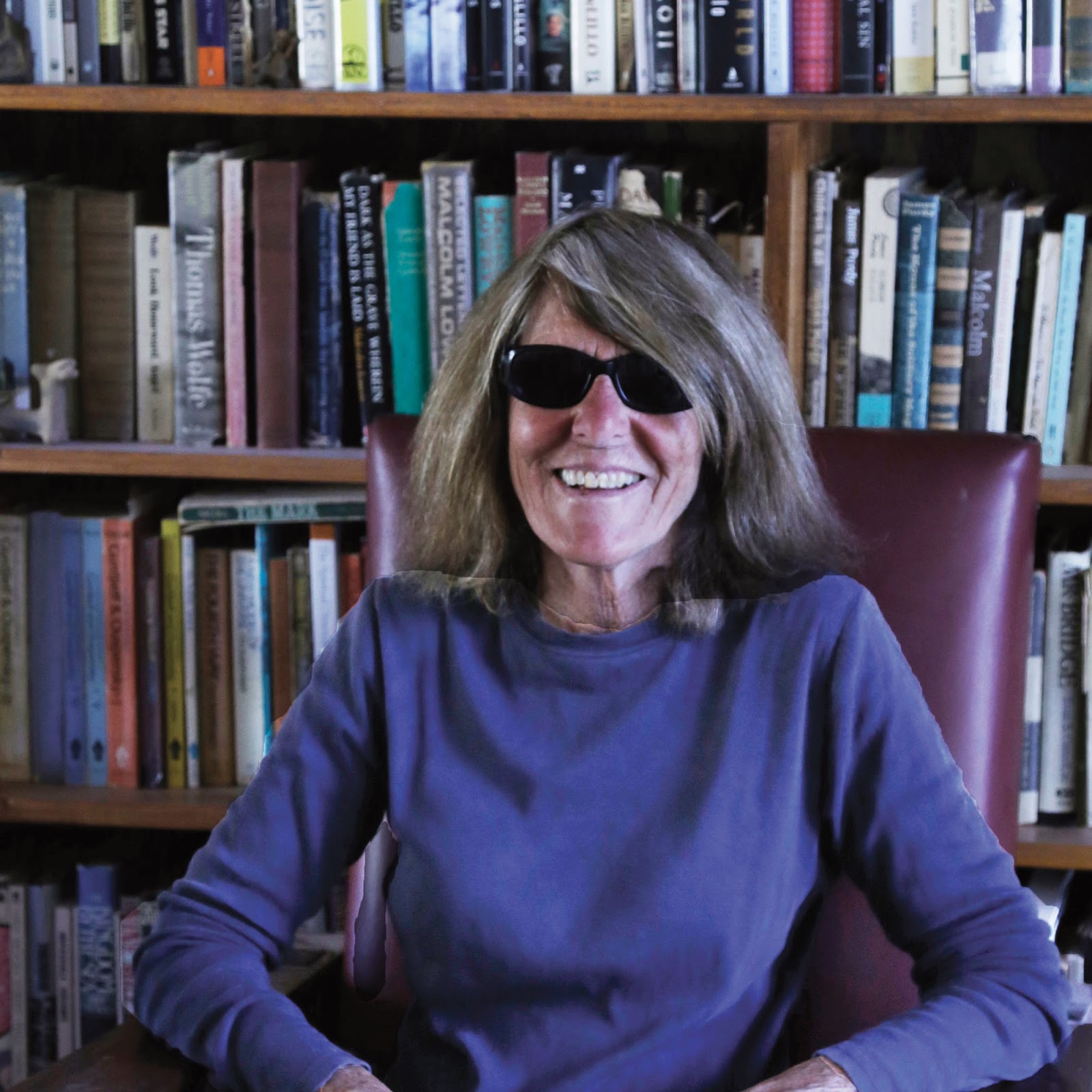
Joy Williams. Photo: Anne Dalton
Finished the third short story in Joy Williams's collection, The Visiting Privilege. 'Summer' (first printed in The New Yorker in 1981) is delightful; chronicling the events and personalities during five weeks of an August summer holiday on an island somewhere off the eastern coast of the USA. It is warm, affectionate and humorous with less of the underlying melancholy present in the first two stories in the book (although that seam is not entirely absent). The children leap off the page as unique, wholly believable, perfectly-drawn individuals. The women who come in succession to stay on five consecutive weekends are brilliantly presented with such economy that it takes your breath away. Steven, the author boyfriend to each of the five women, is never seen but I formed a picture of him nonetheless, laughing out loud on the one occasion we hear his voice through a resolutely closed door. Constance and Ben feel real and you think ... maybe I mean hope ... their love will endure (because of the final paragraph) despite the frailty of the human body.  

The story has the feel of memoir. Maybe it is, partly. But maybe it's entirely constructed from the writer's imagination. More likely, I suppose, it's an amalgam of both because isn't that what all fiction is, in the end? I chuckled quietly as I read, sitting under shade in our garden on a hot summer's day here in Canberra. I am beginning to feel in awe of Joy Williams and there are still forty stories to read in this collection. How could it have taken me thirty-five years to catch up to this story? And longer than that to find my way to Joy Williams in the first instance. Fool that I am.

Monday, December 12, 2016

Cay by Martin Pevsner

Another interesting read, the short story Cay by Martin Pevsner - winner of the 2016 Mogford Food and Drink Short Story Prize (this year's entries close 15th January 2017.) It fits with what might be the current zeitgeist for somewhat detached, observational writing. There's nothing much in the way of beginning, middle and end, in any order you care to think of; nothing at all in fact.

Martin Pevsner's web site is worth visiting.

Sunday, December 11, 2016

The Human Phonograph by Jonathan Tel

The site of China's first nuclear weapon research base in Haiyan county, Qinghai province.
From The Guardian:  Many years on... The site of China’s first nuclear weapon research base
Haiyan county, Qinghai province. Photograph: STRINGER/CHINA/REUTERS
Understated yet compelling writing. A short story by Jonathan Tel; winner of the Commonwealth short story prize 2015. Details of each year's competition may be found at Commonwealth Writers

The Human Phonograph can be read at the Guardian website. 

Thursday, April 07, 2016

Chekov essay in on time

It begins ...
This essays discusses Anton Chekhov’s story ‘The Lady with the Little Dog’ published in Russian in 1899 and in English three years later. The essay makes the case that this deceptively simple story (which Nabokov described as “one of the greatest stories ever written” ) illustrates the mould-breaking innovations in approach, structure, style and technique which Chekhov introduced to the short story form. It demonstrates Chekhov’s position as what one might call a late-19th Century, proto-Modernist. His short stories establish a literary bridge between Victorian-era fiction – heavily laden with deterministic plot, character detail, classically antagonistic relationships and a recurring tendency towards formal narrative closure or resolution – and a more open, ambiguous and multidimensional portrayal of the human condition within realistic settings, with recognisably realistic characters and narrative structures that resist movement inexorably towards seemingly ineluctable conclusions or resolution.
And ends some two thousand or so words later. We shall see.

Tuesday, February 09, 2016

John Gray o' Middleholm

James Hogg, 'the Ettrick Shepherd'
painted by Sir John Watson Gordon
Appropriately enough, I admit - dare one write confess? - I have never read The Private Memoirs and Confessions of a Justified Sinner by James Hogg. I know that I should have done before now but ... no excuse ... I just have not. I shall add it to the list.

Today I read one of his short stories, included in Philip Hensher's Penguin anthology. 'John Gray o' Middleholm' was published around 1820 or 1821 in a collection by Hogg which was titled, Winter Evening Tales, Collected Among the Cottagers in the South of Scotland. It must have been a popular enough two-volume collection because the version "Digitized by Google" is an 1821 Second Edition printed by Oliver & Boyd in Edinburgh.

Nearly two hundred years old, describing a lost Scotland and people whose lot has fallen into history mostly - home-based weavers, cobblers, the remnants of an agricultural peasantry 'John Gray' has more common - in an odd sense - with characters out of Mark Twain or Rip Van Winkle than with urban Scots or those from the Victorian-era onwards. 

It made me laugh in places, this moderately hokey tale of a Borders' ne'er-do-well, always short of money, always hungry with a long-suffering, gossiping and not very bright wife, too many children and daft ideas of the ways he'll rise above his lowly station. Is it a ghost-tale?  Not really although there is definitely an uncanny twist. Is it a homily to thrift and the rewards of hard work? Not at all, although a prodigious annual harvest of fruit might make you think so at first. Anyway, it's an enjoyable, gentle satire. Well worth reading, it has earned its place in Mr. Hensher's review of 250 years of British short story telling.

Friday, January 08, 2016

No single fact can ever define us - two strong women

Another two short stories from Philip Hensher's anthology bit the dust today; both by women whose long lives straddled the turn of 18th and 19th Centuries, both of whom experienced mental breakdown, both of whom survived their traumas to write.

HannahMore.jpg
Hannah More by Henry Pickersgill
Hannah Moore was born in 1745, the year of the Jacobite Rebellion.  She wrote plays, poems and short stories such as the morality tale, Betty Bridges, the St. Giles's Orange Girl.  It's too easy to observe that such a one-dimensional tale of the moral improvement made possible through hard work, thrift, respect for God's laws and the beneficent power of the philanthropic middle-classes could not be written today.  But it's just as true that Miss More wrote her short, unmistakably 'Dickensian' fable three years before the great chronicler of London's poor was born.  Hannah was a leader of the Bluestocking group (maybe not proto-feminist but certainly supportive of educated, intellectual, socially-conscious and engaged women).  And when it came to the great cause of her day - the abolition of the slave trade - Hannah More was on the right side of history.


Mary Lamb Portrait.jpg
Mary Lamb
Mary Lamb was born twenty years after Hannah More and lived to the middle of the 19th Century.  What sorts of changes must these two women have seen in their lives, each of more than eight decades?  It was an era of enormous change in the structure, economy, society of Great Britain - the great age of the industrial revolution that made Victorian Britain the largest Empire the world had ever known.  Where Hannah More's story centred on the misfortunes of the urban poor and the reforming efficacy of the emergent middle-class, Mary Lamb's nostalgic rumination on childhood, The Farm House, harked back, I think, to fabrications of a lost (perhaps never-existed) agrarian idyll. I was startled, then, to discover that aged 32 Mary Lamb stabbed to death her mother who was sitting at their dinner table.  Mary was convicted of lunacy, spending short periods in institutions throughout the rest of her life.  She and her brother Charles were, however, fully engaged members of London's literary life.

Friday, January 01, 2016

More short stories - back in the 18th Century

I read a couple of tales from Philip Hensher's anthology, both from the middle of the 18th Century.  Neither will make it into my list of all-time greats.  I'm not entirely persuaded they merit a place in a review of the British short story across 300 years of literary history.  Mr. Hensher concedes some of my reservations when he writes that,
"The first pieces in this anthology are not, in the modern sense, short stories  But they bear in a vital, animating way on the short story's historical development.  They are trying to distinguish themselves from the long form, and are drawing on a number of literary counter examples."
And I think ... maybe.  But Philip Hensher read many, many more short stories in preparing his anthology than I shall ever read (I suspect) so I'll take him at his word; accept his judgement.  That still doesn't make me any more enamoured of the second and third stories in his first volume, by Jonathan Swift and Henry Fielding.

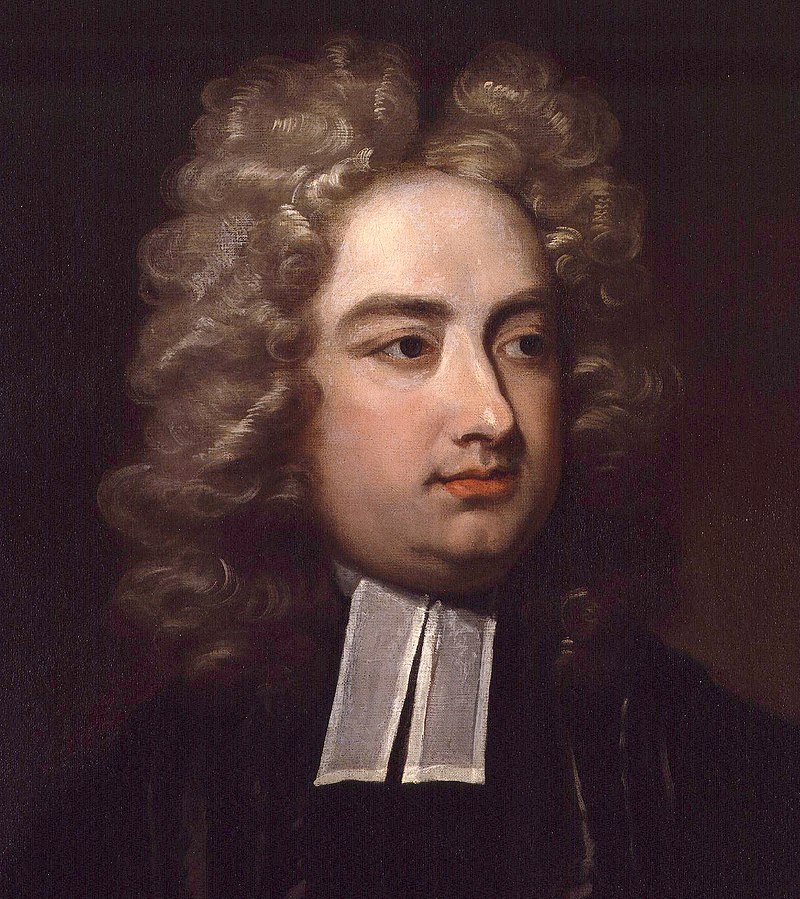
Jonathan Swift by Charles Jervas detail.jpg
Jonathan Swift, by Charles Jervas
I'm not a fan of Jonathan Swift.  For reasons that surprise me I struggle a bit with satirical writing generally and with Swift in particular.  I'm not entirely sure why that is; something to do, perhaps, with the way it ages so very quickly. That and what I think of as a fine line between satire on the one hand and cynicism, condescension and even misanthropy on the other.  Jonathan Swift, I've long felt, tends towards all three of the latter.  

Gulliver's Travels has always struck me as a distasteful book and it's not a surprise that most attention has been given to the first two adventures (often in a form rendered safe for children).  By the time you encounter the Yahoos I think we're in thoroughly unsavoury territory, even for its time.

Reading Directions to the Footman didn't do anything to rehabilitate Swift in my mind.  Its condescending, nasty tone was never going to appeal to me.  He may be mocking some of the absurdities of the British class system in 18th Century England but he does so by laughing at the servant classes first and foremost.  Make up your own mind: you can read it here

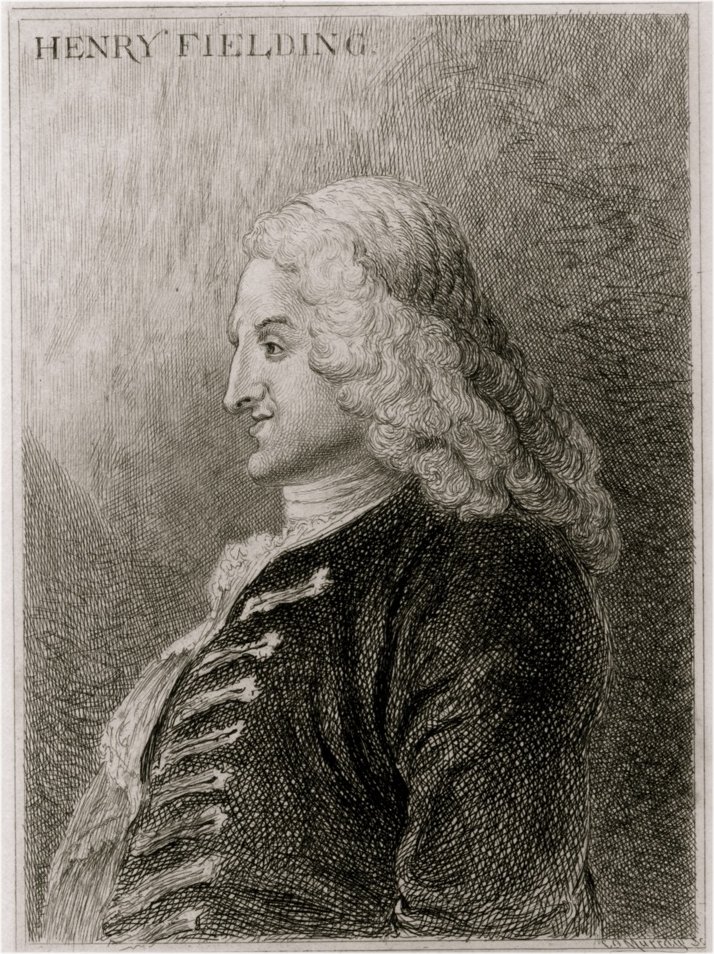
Henry Fielding, etching by Jonathan Wild
Henry Fielding's story The Female Husband seems to me to have all kinds of story-telling problems; too many, I feel, to be contained within the twenty or so pages the tale takes.  Maybe Fielding could get away with it in his longer fiction.  I don't know because I've never read any of it.  Is that a shocking admission for a man with my pretensions to make?  Probably.  Now I suppose I shall have to read Tom Jones.  As unlikely a tale as The Female Husband may be, it turns out its origins lay in historical fact, which wiki sets out here.  Shows me how wrong I can be.

Tuesday, December 29, 2015

Reading The Beach Boy in this week's New Yorker

PHOTOGRAPH BY DAVID BRANDON GEETING FOR THE NEW YORKER
DESIGN BY TAMARA SHOPSIN
And today's short story brings me right up to date although there is a sense, perhaps, it exists as a remnant of a bygone or fading age; the era of the literary journal, the printed magazine, a periodical.  In this instance The New Yorker.

In his General Introduction to The Penguin Book of the British Short Story Philip Hensher writes of the part played by magazines and journals in promoting and sustaining short story writing before lamenting the decline of such periodical platforms.  There has ensued, he argues, both a loss of engagement with the form and a change of focus (from magazine to competition as the dominant but distorting platform) for those who write short stories.  Mr. Hensher writes,
"For the greater part of the short story's history in Britain, the main publishers of short fiction were the editors of magazines and journals ... Blackwood's, Chamber's Edinburgh Journal, Household Words, All the Year Round, Cassell's, The Fortnightly Review, The Strand, ..."
then continues,
"The possibilities for the writer of short stories have narrowed significantly in recent years. Where once there was any number of paying journals ... now the principal outlet for many writers of short stories is not publication but competitions."
before concluding this thread of his Introduction with the mildly depressing observation that,
"There are very few outlets still able to pay a writer for a short story in a way that could encourage a writer to persist, and with the sort of editorial investment that will enable a writer to develop. Most of them are in the United States. The New Yorker has, happily, been able to develop the short-story writing careers of two of the best short-story writers now at work, Tessa Hadley and Zadie Smith.  There is no British journal that would have published Hadley's stories, as the New Yorker has, twenty-one times, and paid properly for them."
These are reasonable observations, accurately describing a decline in printed publication that's clear and regrettable, I'm sure.  Oddly, however, it seem to me almost nothing is said by Mr. Hensher about the role now played by online platforms.  There is, I think, a sense in which his Introduction limits itself to a lament for the lost era of publishing newspapers, magazines, journals, etc in hard copy forms.  And that's fair enough - up to a point.  For those of us of a certain age that's how it has been for most of our lives and for centuries before us.  But ten years from now not even The New Yorker will survive in hard copy, printed format.  We'll still be reading short stories though, online in new-form periodicals and journals.  Who knows, there may even be a renaissance of the short story?

None of which is what I originally came here to write about today.  


Ottessa Moshfegh.
Otessa Moshfegh. Photo by Krystal Griffiths
I came to note the engaging, intriguing short story I read in The New Yorker as it happens (which explains my ruminations above).  It's a story called The Beach Boy by Otessa Moshfegh (of whom I had never heard until I visited this week's New Yorker site - which only tells you something about my lack of knowledge).  There's a detached alienation to the narrative voice in the story; a sense of fin de siècle anomie (if that's not too daft a notion given the date).  In a Q&A article linked to the publication of the story Ms. Moshfegh talks of her interest in "repressed Western consciousness" around which her story circulates in a seductive way.  Like most of the contents of The New Yorker the story is well worth reading, and not simply as a contemporary contrast to something like Defoe's work (yesterday) from 300 years ago but as a good read in its own right.

Monday, December 28, 2015

Beginning with a ghost story

Today I opened the first of (probably too many) books I bought before Christmas to read during my three weeks off work.  When I originally read in The Guardian about The Penguin Book of the British Short Story, edited by Philip Hensher, I could hardly contain myself. (I'm not quite sure why that should be.)  

As one does in Australia, where books are unreasonably expensive due to restrictive wholesaler practices, I sped off to the Book Depository, placed my order for the two, lovely hardback volumes then waited - until today.  Keen for the books to arrive I suppressed my impatience by listening to Philip Hensher discuss the work with Claire Armitstead on the Guardian's Books podcast.  This much I learned from their conversation: whatever else I read in the anthology I am already in its editor's debt for pointing me in the direction of a 'lost' tale entitled The Forty Litre Monkey.  If that prospect doesn't entice you, nothing will. 

The first story in the anthology is Daniel Defoe's A True Relation of the Apparition of one Mrs. Veal, the next Day after her Death: to one Mrs. Bargrave at Canterbury. The 8th of September, 1705.  Snappy title.  Not surprisingly, given the British tradition, it's a ghost story.  According to wiki it's thought to be the first modern ghost story and I have no doubt Mr. Hensher sees it that way too.  The early date and theme make the story, published anonymously as a pamphlet in 1705, an ideal place to begin.

I've not read much by Daniel Defoe.  Any boy from my time and background would, of course, have read Robinson Crusoe.  Man Friday lives with us forever.  I'm pretty sure I first read the novel in an abridged, children's version presumably stripped of the worst excesses of its 18th Century racism.  I read the unabridged text years later but it's the children's version I recall best; not to forget the classic black and white TV series of the 1960s, which I remember mostly for its stirring signature tune.  In my defence I can only tell you I was seven years old when it was broadcast in 1964.  Many years later, as a student at Sydney University, I read Roxana, or to give this early, surprisingly proto-feminist yarn its full name, The Fortunate Mistress: Or, A History of the Life and Vast Variety of Fortunes of Mademoiselle de Beleau, Afterwards Called the Countess de Wintselsheim, in Germany, Being the Person known by the Name of the Lady Roxana, in the Time of King Charles II.  Another snappy title, although, to be fair to Defoe, such was the practice in the early days of the novel.

It's no great surprise then that I'd never read the story of Mrs. Veal's apparition.  But it's a good place to start a two-volume set of 90 short stories of British origin spread across nearly 300 years.  I'm looking forward to all that follows, not least the stories by writers I've never heard of before.  So far - day one - I've read Mr. Hensher's 'General Introduction' and Defoe's ghost story (which predates, to illustrate a point, M Night Shyamalan's movie The Sixth Sense by 296 years).  Already it's clear my purchase is money well spent.

Monday, March 09, 2015

Sarah Braunstein's All You Have to Do

Pic: Grant Cornett / Hand Lettering: Mousecake
I read Sarah Braunstein's compelling short story in The New Yorker here.  As I read I listened to the accompanying sound file with the writer reading her story.  (Does that count as me reading - which I was - if the audio file was running too?)

It's a good read.  Short stories are meant to include a twist at the end and Sarah B delivers one - for this modern age of ours - but credible nevertheless.  The story is set in an unnamed town in 1972 when the central character Sid Baumwell is, we're told, sixteen.  I was fifteen that year so the story touches on a familiar period of awkward adolescence.  Sarah B captures that time, those emotions, the uncertainty and the smothering small town feel of Sid's situation very well.  It wasn't hard to suspend disbelief and go with the flow,  I laughed more than once - at the continuous repetition of "Sid said", the magnitude of a life time's supply of aluminium foil, the awfulness we wrongly find as teenagers in family life - and the slight twist at the end made me pause to think about how a comfortable and safe growing up (such as I enjoyed) sometimes, perhaps always, hangs on fragile, invisible threads which, if we're lucky in our growing up (as I was too) we seldom notice.

Well worth reading.

Sarah Braunstein's web site is here.