Pages

Sunday, February 14, 2016

It was seven years ago today ...

... or thereabouts. This photo appeared in my Facebook feed this morning telling me it was a post from seven years ago. Really? ... I thought. Did we see Leonard Cohen on St. Valentine's Day? No, a Google search quickly confirmed. It was the 31st January.

This is true nevertheless. That was the best concert I've attended in my life. Quite brilliant be a singer, song-writer, poet, performer at the peak of his powers. I have been listening to Leonard Cohen singing since my older brother bought Songs of Leonard Cohen in maybe 1968 or 1969. I was eleven or twelve years old. 


When he started with "Come over to the window, my little darling ..." there may have been a welling-up in my Scottish Presbyterian old-man's eyes. A good night to be out and about with Spike.

Saturday, February 13, 2016

Dickensian

Television at its very best. Flawless in every department.

Friday, February 12, 2016

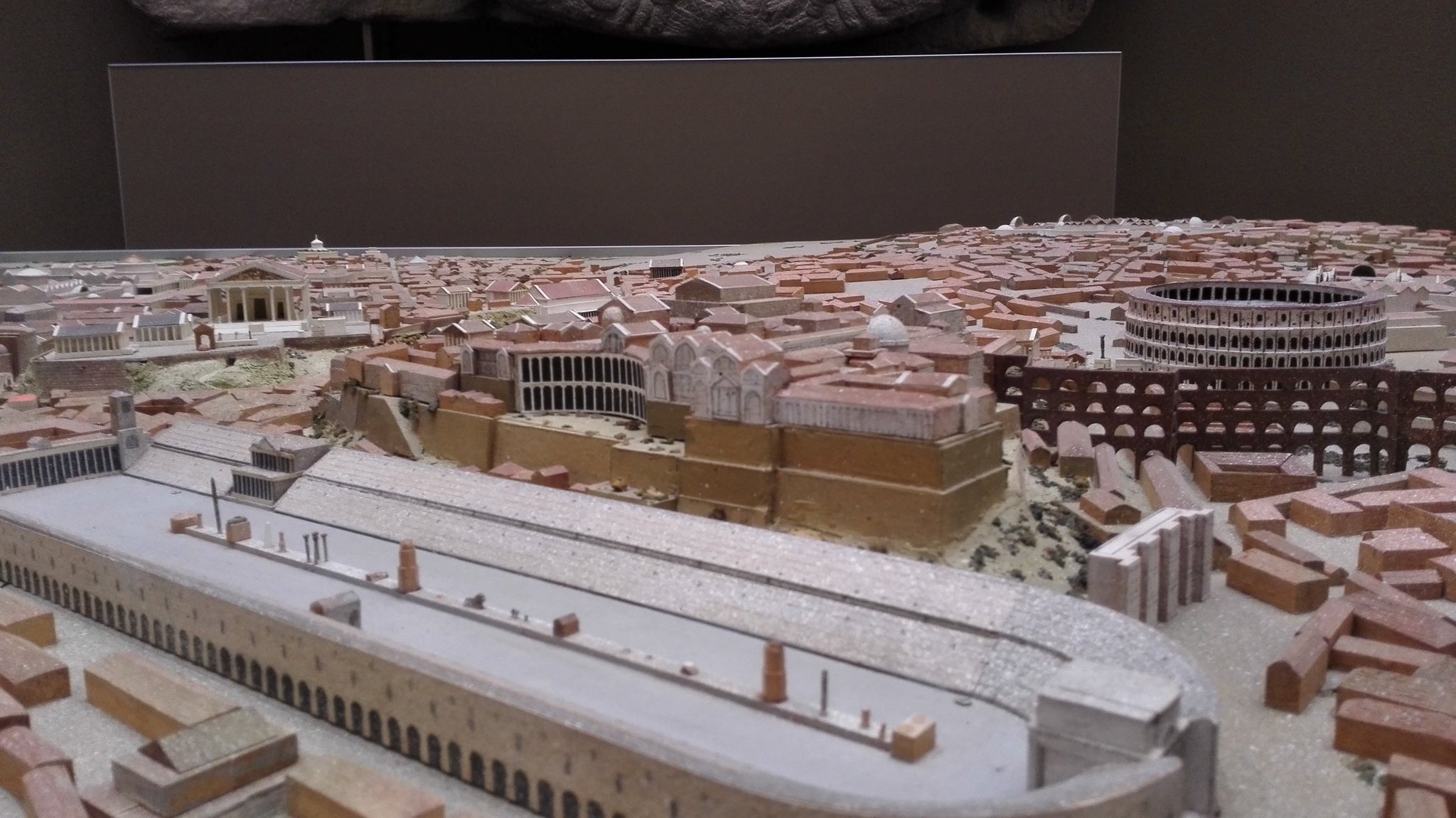
When in Rome ..

The Eternal City

Not quite the eternal city but an approximation of what it might once have been. Spike and I visited the delightful, leafy campus of the Australian National University so I could buy the core text book for my film studies course: The Film Experience by Timothy Corrigan and Patricia White.  It's $79 by the way. Not cheap, I say, for a slim volume. I wonder how students with less disposable income than untypical yours truly find the cash for books like this and more. Maybe they don't.

On our way back to the car from the pleasant Co-op Bookshop we called into the Classics Museum of the School of Literature, Languages and Linguistics to have a look at its small collection of glass artefacts, mostly from the first and second Centuries A.D. Adjacent to the cabinet of oil vials, bowls, dishes and a tumbler in glass there sits the large model of ancient Rome above.. Veni, vidi, vici ... after a fashion.

Thursday, February 11, 2016

Buster Keaton - The Scarecrow (1920)


This the first screening on my film studies course at the ANU next week. Almost 100 years old and still it looks fresh. I think comedy may be the only genre that has travelled well over the intervening years. Modern Horror, the Western, Romantic Comedy retain many of the components, tropes and structural underpinnings of their predecessors but the original silent productions have dated - in technique, story-telling and dramatic effect - in ways that Comedy has not. Buster Keaton was a genius, of course. That much is obvious from the movie. But even allowing for his extraordinary talent it's interesting to watch the film simply to note how many of its elements remain with us today. It still makes me laugh and more than much of what passes for film and television comedy these days. But the early period of cinema looks so naive, so innocent reflected through the viewing prism of genres other than comedy, let's say, of The Exorcist, The Unforgiven or Trainwreck. 

Wednesday, February 10, 2016

What is plot?

I returned to my MOOC this afternoon; Start Writing Fiction with the Open University. Today's exercise asked us to consider the question, what is plot? This is how the question was framed.
How do you get from making notes for a story in your journal to thinking up a suitable plot line? The novelist E.M. Forster (1927) explains this very clearly. 
Image result for e m forster 1927He describes a story as ‘a narrative of events arranged in their time-sequence’ and a plot as ‘also a narrative of events, the emphasis falling on causality.’ (Forster, E. (1927) Aspects of the Novel, Harmondsworth: Pelican. p. 87.) 
For example, ‘The king died, and then the queen died’ is a story. ‘The king died and then the queen died of grief’ is a plot. 
This is because there is a reason given for the queen dying. In a story, someone dying is not in itself interesting. It is the reason for the death that fascinates the reader, especially if the reason is connected with something that has happened to, or been done by, another character. 
Readers are well tuned to guessing and imagining causes just from the details they perceive in the story. With this in mind, even the smallest recorded observations can be relevant.
For example: ‘A woman on a bus today carried her Pekinese dog inside her handbag. It had a red bow on its head that matched her sweater.’ 
This short description of a real person could be the starting point for a fictional character. Imagine:

  • Who might she have been?
  • Where was she going?
  • What did her appearance suggest about her mood or state of mind?
  • How old was she?
  • How did she live?
In answering these questions you are starting to build a concrete sense of character. You are starting to get a story.
I read the contributions of some of my fellow students. A few of them were very good; well-written, imaginative, precisely drawn portraits of a woman - almost invariably older rather than younger - and her toy dog. One of the responses (from the highly talented Andrew Dobson, retired Professor of Politics) was quite brilliant; original, witty, with an almost Poe-like sense of the macabre, I sat for a while puzzling over ways to approach the exercise from a different angle. Then I landed on an idea, which I worked at for a couple of hours. Three hundred and eighty-five words later I submitted this piece. I hope it works.
We make this trip once a week you know. Old Patsy there and me. Dressed to the nines we are for a special day out. Splash of red this morning … makes bit of a statement, don't you think? 
You can tell we get noticed when we sit ourselves down. Mind you, there’s those as says, it’s not becoming of ladies of a certain age. But I say, hang ‘em Duchess. If you can’t put on a spot of red when you’re 69, when can you put on a spot of red? 
We caught the Number 10 again. Latymer Court to Kensington High Street in eighteen minutes. Five more minutes’ walk to Kensington Gardens for a bit of grass and a stroll. The truth is, though, her legs aint what they was once. Sometimes takes us nearly fifteen to reach her favourite bench. Next to that chestnut tree she likes so much. 
But I cannot lie. This is a come down for a lady like me. Riding on a bus. 
My family was born to higher ranks. I know folks don’t think it so to look at us but I’m used to limousines and drivers and the very finest of sorts visiting the houses here in London, the Hampshire Estate. Why ... my great-great-grandparents were actually born in Apsely House. I kid you not. There’s not so many that can lay claim to those bona fides.
Although … between you, me and the doorpost … even the apartments of an English Duke are a bit of a decline for a lineage with our distinction. Dare I say it? With our pedigree. 
You’ll think I’m a little snob when I say this. But when one of your family has served as lapdog to the aunt of the Xienfeng Emperor himself – a Lion Dog in the Imperial Palace no less – it’s a fall from grace to be presented as a gift … even to the wife of the 3rd Duke of Wellington. 
And now? 
eyes pekingese photo picsAll those generations gone and me being carried in the handbag of sweet old Patsy there. She’s a retired short hand secretary and typist from Chiswick, you know. And here the two of us are … riding on a double-decked bus in West London. 
What can I tell you? 
It’s a dog’s life.

Tuesday, February 09, 2016

John Gray o' Middleholm

James Hogg, 'the Ettrick Shepherd'
painted by Sir John Watson Gordon
Appropriately enough, I admit - dare one write confess? - I have never read The Private Memoirs and Confessions of a Justified Sinner by James Hogg. I know that I should have done before now but ... no excuse ... I just have not. I shall add it to the list.

Today I read one of his short stories, included in Philip Hensher's Penguin anthology. 'John Gray o' Middleholm' was published around 1820 or 1821 in a collection by Hogg which was titled, Winter Evening Tales, Collected Among the Cottagers in the South of Scotland. It must have been a popular enough two-volume collection because the version "Digitized by Google" is an 1821 Second Edition printed by Oliver & Boyd in Edinburgh.

Nearly two hundred years old, describing a lost Scotland and people whose lot has fallen into history mostly - home-based weavers, cobblers, the remnants of an agricultural peasantry 'John Gray' has more common - in an odd sense - with characters out of Mark Twain or Rip Van Winkle than with urban Scots or those from the Victorian-era onwards. 

It made me laugh in places, this moderately hokey tale of a Borders' ne'er-do-well, always short of money, always hungry with a long-suffering, gossiping and not very bright wife, too many children and daft ideas of the ways he'll rise above his lowly station. Is it a ghost-tale?  Not really although there is definitely an uncanny twist. Is it a homily to thrift and the rewards of hard work? Not at all, although a prodigious annual harvest of fruit might make you think so at first. Anyway, it's an enjoyable, gentle satire. Well worth reading, it has earned its place in Mr. Hensher's review of 250 years of British short story telling.

Monday, February 08, 2016

You've got mail

The course outlines, reading lists and timetables for my return to full-time study dropped into my ANU mail box this morning. Reads quickly then takes a deep breath ... 


Image result for twelfth night
Mark Rylance in the Balasco Theater Production
- ENGL2075 - Creative Writing
- ENGL3005 - 16th, 17th and 18th Century Literature
- FILM1002 - Introduction to Film Studies
- HUMN1001 - Digital Culture: Being Human in the Information Age

There are fifteen hours of teaching / contact time plus an assumed additional study time of thirty hours. Excuse me, that's more than my contractual obligations in my last job - than in any full-time job I've had.

There are no exams, thank goodness. But there are going to be as many assessed components as there are weeks in the semester. Maybe more once you count up - by which I mean me by the way - once I count up tutorial participation, tutorial presentations, workshop projects, weekly 'quizzes', obligatory essays and a creative writing portfolio.

Then there are the reading lists. Voluminous is a word that comes to mind. The required Week One reading looks like this (with plenty of 'further suggestions' in case boredom sets in).

  • Orhan Pamuk, “My Father’s Suitcase”
  • Rilke's “Letters to a Young Poet”
  • Helen Garner, “I”
  • William Shakespeare, "Twelfth Night" and "Sonnets" (not all of them, obviously)
  • Corrigan, Timothy, and Patricia White."The Film Experience: An Introduction". Chapter 1 (Encountering Film) and Chapter 10 (History) plus two screenings
  • Nicholas Carr, “Does the Internet Make us Dumber?”
  • Douglas Rushkoff, “Narrative Collapse”, from Present Shock: When Everything Happens Now
  • Genevieve Roberts, “Google Effect: is technology making us stupid?”
Week One!

I must hope the answer to the questions posed by Nicholas Carr and Genevieve Roberts is a resounding "no" or I'm in trouble. Actually, I'm being disingenuous there. I already know the answer: of course neither the Internet nor technology are making us dumber.

But don't get me wrong. I'm not complaining about any of the above (no matter how much mock-horror I may suggest). This is exactly what I packed-in my job for. Scary. Challenging. Exciting.

The best decision I've made in years. 

Tally-ho.